Viswanathan Anand
Chess has always ranked its players down to the decimal point, but it has never had a proper night out to thank everyone else who keeps the sport running. That changed in Samarkand, where FIDE staged the inaugural FIDE Excellence Awards alongside the 46th Chess Olympiad, a ceremony built specifically to reward federations, organizers, creators and initiatives that ratings and Elo numbers were never designed to capture.
The programme, established in 2026 as a biennial event covering achievements from September 2024 to August 2026, ran through an open nomination process before a jury shortlisted ten nominees per category across eleven categories. A separate panel then picked the winners, a structure closer to a film awards season than anything chess has tried before.
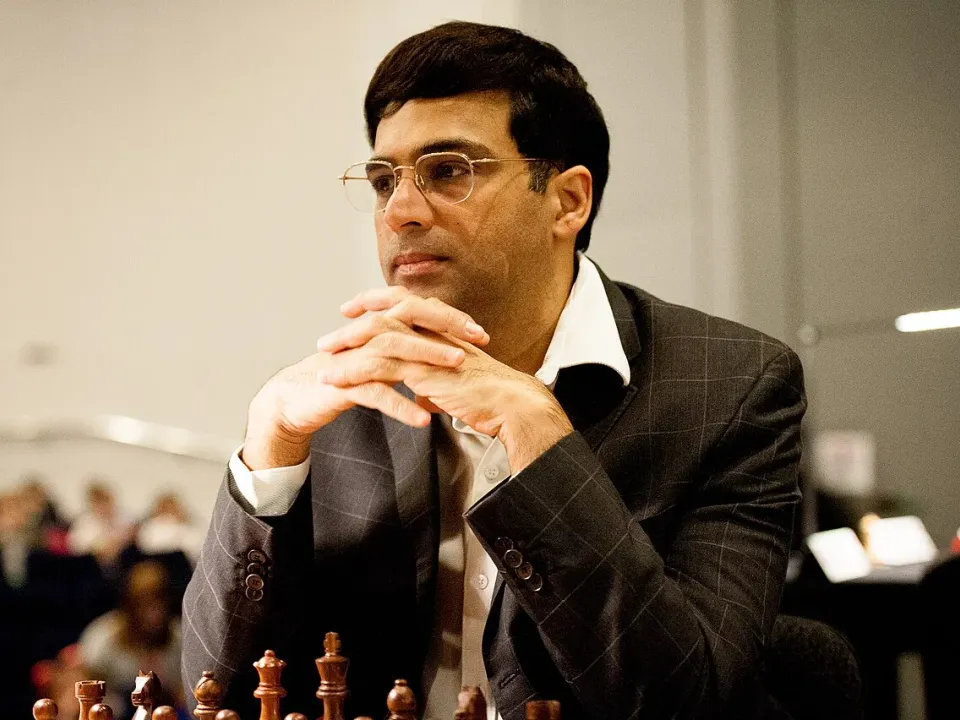
Odil Abdurakhmanov, representing the President of the Republic of Uzbekistan for Sports, opened the evening by framing chess as a universal language reaching well beyond competition. Viswanathan Anand then welcomed guests and thanked the Government of Uzbekistan for its hospitality in hosting the event.
“Behind every great player, there are people who supported them, directly or indirectly: federations, coaches, arbiters, organizers, sponsors, promoters, photographers, professionals from many backgrounds who use chess as a tool to help people grow and become better,” Anand said. He added that the night was simply about saying thank you to those who showed up when it mattered.
On the competitive side, Yağız Kaan Erdoğmuş took Best Breakthrough as the rising talent of the cycle, while Levon Aronian won Best Comeback for another late-career resurgence.
India’s Open and Women’s National Teams shared the Best Team award, built on the historic double gold at the 2024 Olympiad in Budapest and a run of strong results since.
Łukasz Nowak was named Best Chess Player with a Disability, with Łukasz Turlej collecting the award on his behalf.
The most emotional moment of the night came with the Daniel Naroditsky Best Creator Award, a category newly named for the American grandmaster, educator and streamer who died earlier this year.
Arkady Dvorkovich called Naroditsky someone who “made an amazing contribution to promoting chess to younger generations” and “worked endlessly.”
ChessBase India was named the first-ever recipient, and as part of the prize wins a free spot at the next Naroditsky Memorial in Charlotte, tying the award directly to the tournament created in his memory.
The tournament and federation categories doubled as a scoreboard of their own. Qatar Masters Open took first in Best Tournament (Open), ahead of the Grenke Freestyle Chess Open in second and the Sharjah Masters in third.
In Best Tournament (Round Robin), Norway Chess finished first, with the Sinquefield Cup second and the Cairns Cup third; part of Norway Chess’s recognition was its new women’s event carrying an equal prize fund to the men’s.
Best Federation went to the Uzbekistan Chess Federation, with the Kazakhstan Chess Federation taking second and the All India Chess Federation third. In Best Chess Initiative, Chess in Schools and Communities finished first, Chess for Freedom second, and The Gift of Chess third.
The Bundesliga received special recognition as one of the world’s most established national leagues, and the FIDE America Social Initiatives Program 2025 was singled out for delivering 14 completed initiatives across 11 countries through the CCA Diversity Commission.
Best Chess Player awards for both the female and male categories were held back deliberately, to be presented separately at the Closing Ceremony of the Olympiad, saving the sport’s two biggest individual honors for last.
Original source: FIDE
Noticed an error in the article? Report it from here.