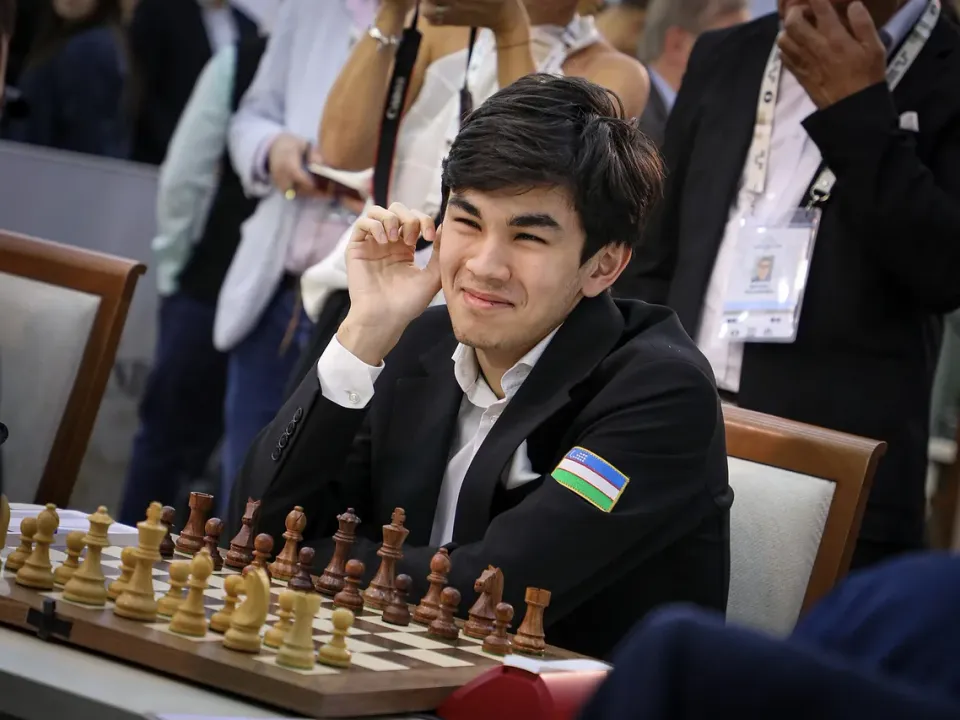
Javokhir Sindarov
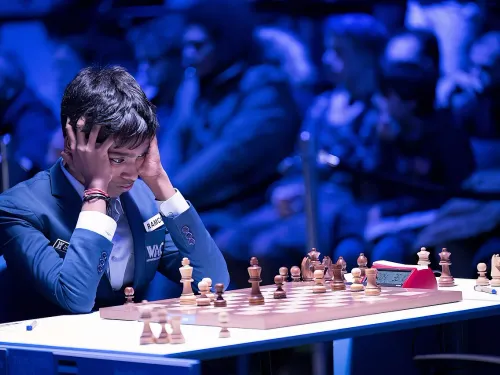
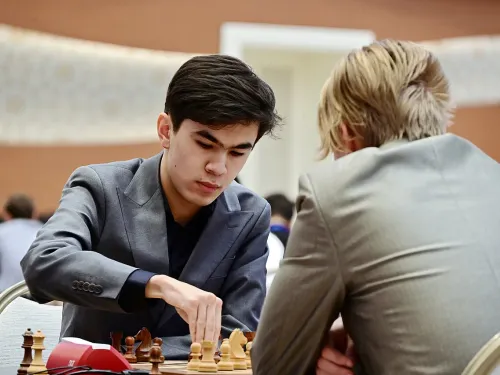
With the World Championship match in Geneva just over three weeks away, Jon Speelman uses his latest ChessBase column to weigh the chances of Gukesh Dommaraju and Javokhir Sindarov. His verdict: Sindarov is “likely to prevail”, though he expects the defending champion to fight ferociously.
The reasoning is psychological as much as chess-based. Speelman thinks that if Sindarov falls behind, he can probably right the ship. If Gukesh starts badly, he suggests, the burden of recent form may make recovery much harder.
A shorter match than Speelman grew up with
The match is 14 games, which gives each player seven Whites and seven Blacks. Speelman notes that this is nothing like the twenty-four games that were standard when he was young.
That matters for how a player hunts for wins. With fewer Whites, there is less room to probe for a target.
Speelman points to the twenty-game Kasparov-Anand match of 1995, where he was a second. Kasparov did not score a win until his fifth White, in game ten, a thunderous victory over Anand’s Open Spanish.
It came in the game after Anand had broken through against Kasparov’s Sicilian Scheveningen.
If a 20-game match could go ten games before Kasparov won one with White, a 14-game match leaves little time for slow starts. That is one more reason a player who can recover from an early setback has an edge.
What the final tune-up showed
Sindarov qualified by winning the Candidates Tournament in Cyprus earlier this year. His last public outing before Geneva was the Clutch Chess Champions Showdown in St. Louis, where, Speelman explains, the stakes and prize money increase during the event. Sindarov erased a 2½-point gap to win it.
Speelman says Sindarov played his best game at the very last, a win over Hikaru Nakamura. He revisits it as a stream of consciousness rather than exact analysis, since it was either a quick rapidplay game or a slow blitz one. What he notices is how Sindarov piled units into the attack.
He ties that to Mikhail Tal’s remark that an attacker’s opponent can only capture one piece at a time. Top players may present themselves as dry and positional, Speelman says, but when pressed they can “hack”, either legitimately or in “swindle mode”. Artur Yusupov’s phrase for it was to “go Yahoo”.
Yusupov’s monster mode
Speelman recalls that Yusupov, a calm and reasonable positional player, could transform into a monster once unleashed. He singles out the first rapidplay tiebreak of Yusupov’s 1991 Candidates match against Vasyl Ivanchuk as one of the great attacking battles. Ivanchuk, he adds, is in the field for this year’s London Classic.
Speelman does not claim the St. Louis game predicts anything in Geneva, only that he is considering whether Sindarov’s choices there might affect the match, “if at all”. He calls both men brilliant tacticians and hopes that even under almost intolerable strain they produce fierce fighting games.
Over the remaining weeks, he expects both camps to check analysis with human and computer helpers, possibly play training games behind closed doors, and work on physical condition. His next column is due on 6 December.
Original source: ChessBase
Noticed an error in the article? Report it from here.