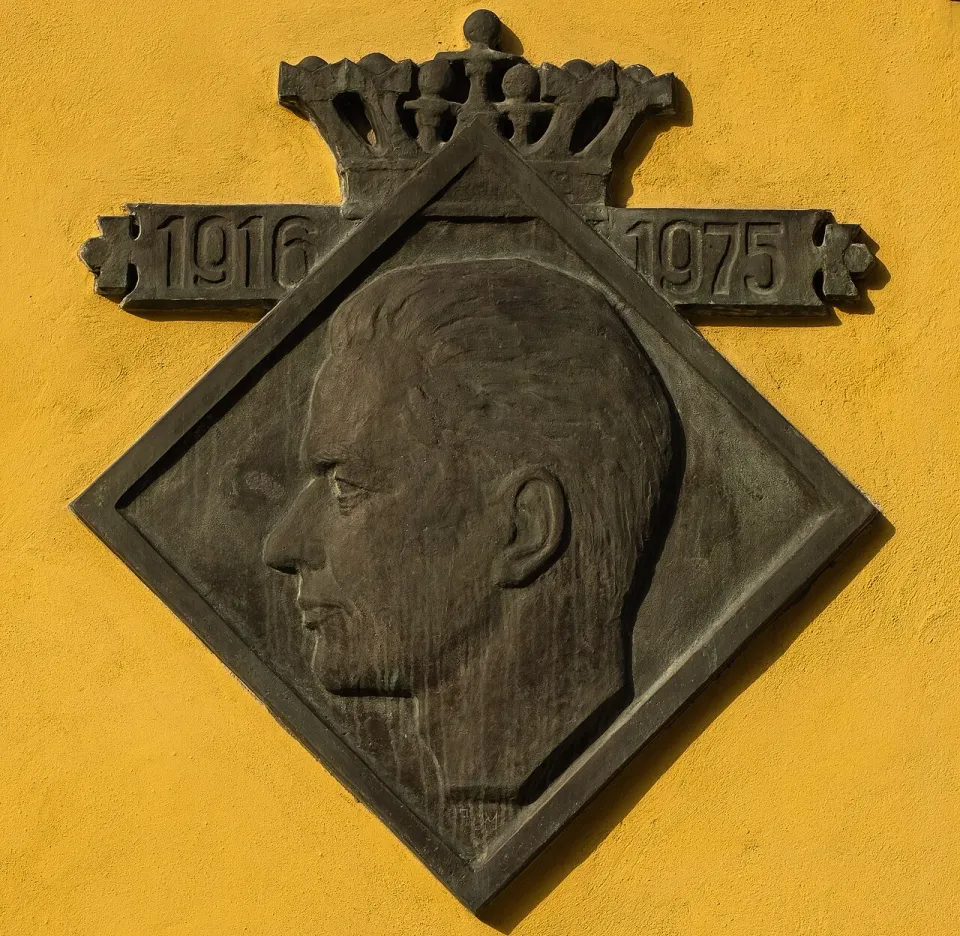
Relief of Paul Keres
Vasily Panov was born on 1 November 1906 in Kozelsk, in the Kaluga region, and he never ranked among the Soviet Union’s leading players. His lasting mark is on opening theory, where the Panov Attack still carries his name. ChessBase’s profile of him also dwells on a darker chapter that changes how his career reads.
A solid, not a great, player
Panov learned chess from his father at seven and played his first Moscow tournaments at fifteen. As a young man he won a game against José Raúl Capablanca in a simultaneous exhibition. He became Moscow champion in 1929, then finished runner-up in 1935 and 1939 and took bronze in 1941 and 1946.
His best result was winning the 1938 USSR Championship semifinal in Kyiv. He reached the national final five times between 1935 and 1948, with eleventh place in 1939 as his best finish. FIDE gave him the international master title in 1950.
Poor health limited him after 1957. He played his last tournament in 1963, though he made one final appearance in Skopje in 1970.
The theoretician
Panov’s real influence came through print. He wrote instructional books and biographies of Chigorin, Capablanca and Alekhine. From 1942 to 1965 he was chess correspondent of Izvestia, and he also wrote for the youth magazine Pionerskaya Pravda.
The Panov Attack arises in the Caro-Kann after 1.e4 c6 2.d4 d5 3.exd5 cxd5 4.c4. He also studied a 6.g3 fianchetto setup against the Scheveningen Sicilian. The 6.g4 attack against the Scheveningen was originally his idea too, before Paul Keres adopted it in the 1940s and it became known as the Keres Attack.
ChessBase suggests that Panov’s dislike of Keres may have started there, which is a reading rather than a documented fact.
Other Panov work included a plan against the Alekhine Defence (4.Nf3 followed by h3) and a …Bb7 setup in the Chigorin Variation of the Ruy Lopez. As Black against 1.d4, he backed a structure that later became known as the Czech Benoni.
The informer
Contemporaries called Panov quarrelsome but humorous, and an uncompromising, at times caustic dogmatist. He struggled to accept defeat at the board. A party member, he wrote in a press climate where even book reviews carried the state’s ideology.
What came out later went further. Gennadi Sosonko reported in New in Chess (2014/3), in his article “The Panov Attack”, that in 1950 Panov reviewed Keres’s book on the Open Games and accused him of spreading “bourgeois-Western” and “anti-Marxist” theories. A corresponding letter turned up in the KGB archives after the Soviet collapse.
In his newspaper pieces Panov also cast himself as a “chess inquisitor”, attacking “rootless cosmopolitanism” and calling for a political cleansing of chess literature. ChessBase says resentment and envy were probably motives alongside ideology.
What it cost Keres
The stakes were real. Keres had played tournaments in the German Reich during the Nazi era, and when the Red Army retook Estonia in 1944 he tried to escape by sea and failed. He narrowly avoided deportation to Siberia, then had to come to terms with the new rulers.
The denunciation had no immediate consequences for him. As a world-class player he was too valuable to Soviet propaganda. He answered over the board by winning the 1950 USSR Championship.
Panov died in Moscow on 18 January 1973 and was buried at Vostryakovskoye Cemetery.
Panov's win against Capablanca in a Moscow simultaneous exhibition, 1925
- 1.
- 2.
- 3.
- 4.
- 5.
- 6.
- 7.
- 8.
- 9.
- 10.
- 11.
- 12.
- 13.
- 14.
- 15.
- 16.
- 17.
- 18.
- 19.
- 20.
- 21.
- 22.
- 23.
- 24.
- 25.
- 26.
- 27.
- 28.
- 29.
- 30.
- 31.
- 32.
- 33.
- 34.
- 35.
- 36.
- 37.
- 38.
- 39.
- 40.
- 41.
- 42.
- 43.
- 44.
- 45.
- 46.
- 47.
- 48.
- 49.
- 50.
- 51.
- 52.
- 53.
- 54.
- 55.
- 56.
- 57.
- 58.
- 59.
- 60.
- 61.
- 62.
- 63.
Original source: ChessBase
Noticed an error in the article? Report it from here.