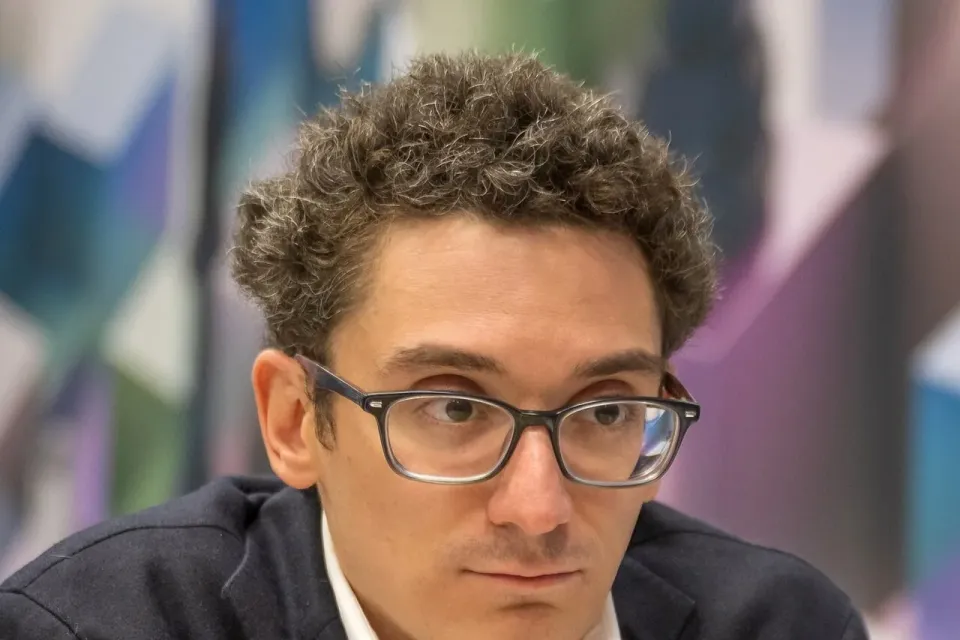
Fabiano Caruana didn’t need a novelty from the computer age to take the first game of his 2026 Grand Chess Tour Finals title match against Praggnanandhaa Rameshbabu. He needed the Italian Game, chess’s oldest documented opening, dressed up in a shape modern engines still haven’t fully tamed.
The Italian has a strange biography. It was the sharpest weapon in the game for centuries, the choice of Greco and later the great 19th-century attacking players, before falling out of elite fashion for most of the 20th century as theory decided 1.e4 e5 2.Nf3 Nc6 3.Bc4 simply let Black equalize too comfortably. For decades it was considered a club-level opening, something you played against weaker opposition rather than a peer at a title match.
That reputation flipped over the last fifteen years. Elite players tired of memorizing forty moves of Berlin Defense or Marshall Attack theory started reaching back for 3.Bc4, not because it was objectively sharper than the alternatives but because it offered fresh, less-mapped middlegames where preparation mattered less than understanding. Magnus Carlsen was central to that shift, using it repeatedly to sidestep opponents’ deep prep rather than to force a theoretical advantage.
Caruana’s use of it here fits that same logic, and the source material specifically flags his choice as an unusual version of the opening rather than a standard main line. That detail matters. The whole appeal of reviving a 500-year-old opening at the top level is that you can still find genuinely uncharted positions in it, which is precisely what makes it dangerous in must-win match situations like a Grand Chess Tour final.
There’s a nice symmetry in Praggnanandhaa facing this in a title match. He’s part of a generation of Indian players raised almost entirely on engine preparation, for whom the Italian’s return represents something closer to archaeology than to nostalgia. The report notes he held his own in the position, which suggests the opening’s charm hasn’t disappeared just because a database exists for it now.
Caruana’s six points from that opening put him ahead early, and history suggests it won’t be the last time a supposedly antique opening decides something important. Chess keeps rediscovering that the oldest ideas in the game are often the ones nobody has fully worked out yet. Meanwhile, in the tournament’s other semifinal-style pairing, Vincent Keymer and Wesley So remained level after an opening round heavy on draws, a reminder that not every match in this event is being decided by opening choice alone.
Original source: Chess.com
Noticed an error in the article? Report it from here.