Bent Larsen
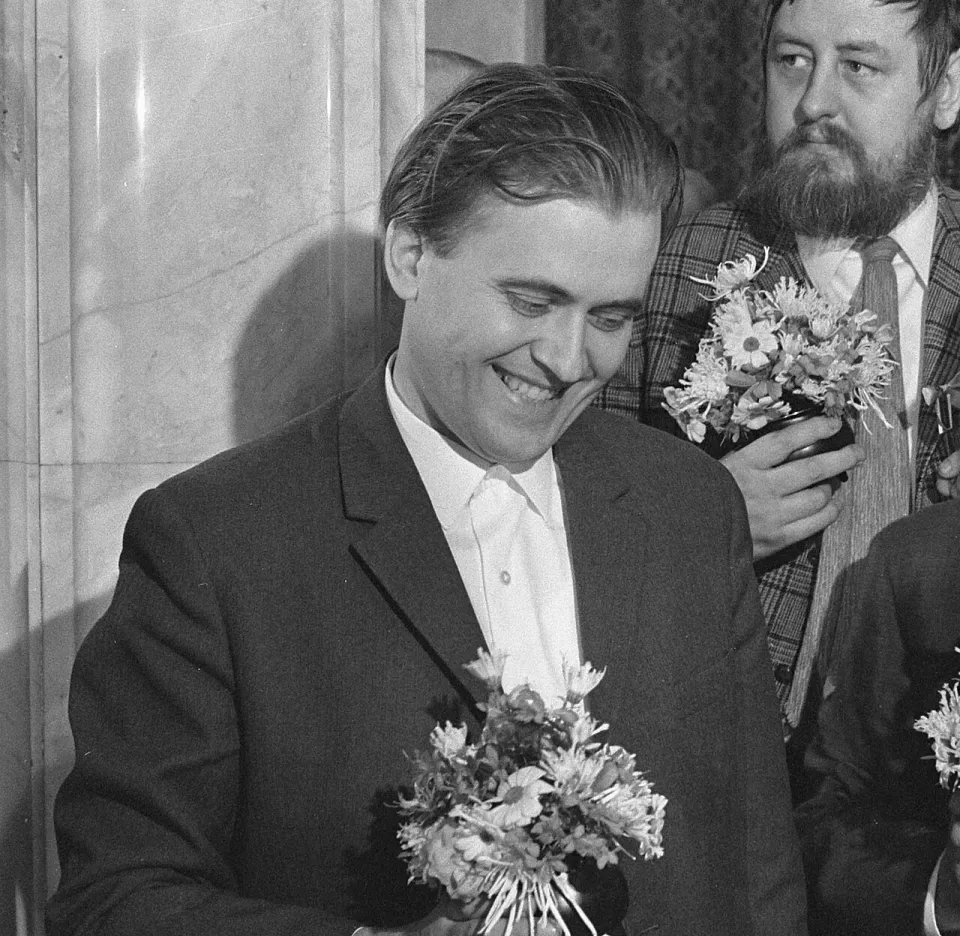
Bent Larsen is remembered for 1.b3 and for opening ideas his contemporaries thought odd. A ChessBase Master Class lesson on his strategy argues that this is only half the picture. His real strength lay in imbalanced positions, where he accepted structural concessions in return for squares, active pieces and attacking chances.
The example is his win over Romanian grandmaster Florin Gheorghiu at Monte Carlo 1968. The tournament suited Larsen: he won it with 9½/13, half a point ahead of former world champion Mikhail Botvinnik. Another former champion, Vasily Smyslov, and Vlastimil Hort shared third on 8½.
The imbalance
All six major pieces were still on the board. Black had an extra pawn, but White had the better structure and better-coordinated pieces. The lesson’s verdict is that White stands better but must play accurately to convert.
Larsen chose 23.h4!, aiming for the initiative on the kingside. The tempting 23.Rxd6 was premature: after 23…Rxd6 24.Rxd6 Qb1+ 25.Kg2 Qe4+, Black has good drawing chances.
Where Black slipped
Gheorghiu answered 23…Qe5! and after 24.b3 played 24…Rc8?!, which the lesson calls a bit slow. Better was 24…a4!, going for counterplay and intending to double rooks on the b-file.
Larsen then played 25.Rd5!, again putting activity and coordination ahead of material. Keeping the e-pawn with 25.e3?! would have let Black regroup in time with 25…Rc5. The game went 25…Qxe2 26.h5! Rc2 27.Rf1.
The decisive error
The crucial mistake was 27…Qe4?. Black should have defended g6 with the unexpected 27…Qe8, intending to bring a rook to g4 for counterplay. With the queen on e4, that route was closed.
Larsen punished it at once: 28.Rxa5 a6 29.Ra4!, gaining a tempo against the badly placed queen, then 29…Qe8 30.Rg4. The rook had travelled from d5 to g4, the very square Black needed for his own rook.
Finishing the job
After 30…Qf8, Larsen played 31.Qe3?!, which kept a clear edge. The lesson points out a faster kill: 31.Rxg6+ hxg6 32.Qxg6+ Kh8 33.Qxc2, and Black is doomed.
The game went 31…Rbc6 32.hxg6 hxg6 33.Rxg6 Kf7. With the queen on the open e-file and the rook on f1 ready to join the attack, the rest was simple: 34.Rg4 R2c5 35.Qd3 Re5 36.f4 Re8 37.Qd5+ Ke7 38.Re1+, and Black resigned. The only move, 38…Kd8, runs into 39.Rxe8+ and 40.Rg8, and the queen is lost either way.
Why it fits Larsen
Dorian Rogozenco, Mihail Marin, Karsten Müller and Oliver Reeh contribute to the 20th volume of the series, which covers Larsen’s openings, strategy, endgames and tactics. Peter Heine Nielsen adds a chapter of memories of the Danish star. One reading of this game is that it shows the link the course stresses: patient positional pressure first, tactics only once the pieces are placed.
Larsen’s own résumé backs that up. He won the Interzonals at Amsterdam 1964 and Sousse 1967, and he earned the GM title after taking individual gold on first board at the 1956 Moscow Olympiad.
- 1.
- 2.
- 3.
- 4.
- 5.
- 6.
- 7.
- 8.
- 9.
- 10.
- 11.
- 12.
- 13.
- 14.
- 15.
- 16.
- 17.
- 18.
- 19.
- 20.
- 21.
- 22.
- 23.
- 24.
- 25.
- 26.
- 27.
- 28.
- 29.
- 30.
- 31.
- 32.
- 33.
- 34.
- 35.
- 36.
- 37.
- 38.
Original source: ChessBase
Noticed an error in the article? Report it from here.