Paul Keres
Munich 1936 was staged by a federation that FIDE had shut out. ChessBase’s retrospective revisits an event the Greater German Chess Federation called a Chess Olympiad, though FIDE never gave it that status. The tournament ran from 17 August to 1 September 1936, alongside the Olympic Games.
Why it was never official
The German federation had left FIDE in 1933. It applied for readmission in 1935, and the matter was debated at the FIDE Congress during the Warsaw Olympiad that year. The application was rejected because the racial laws and the federation’s rules excluding Jews from organised chess were incompatible with FIDE’s statutes.
FIDE’s compromise was to let each member federation decide for itself whether to send a team. England, Belgium and the USA stayed away. Twenty-one nations came, slightly more than in Warsaw in 1935 (20) and Stockholm in 1937 (19).
The politics reached the top of the Reich. Joseph Goebbels had become honorary chairman of the federation at the end of May 1933, and its leader Otto Zander had announced the exclusion of Jews from organised chess that July. By 1938 FIDE had softened its stance, and Germany returned for Buenos Aires in 1939, where it won gold.
An unusual format
The venue was the exhibition hall on the old trade fair grounds at the Theresienwiese. Munich was chosen partly because its chess club was marking its 100th anniversary. Teams played eight boards with two reserves, far more than the usual Olympiad line-up.
All 21 teams met in a single round-robin, a format abandoned only in 1939 when preliminary and final groups took over. The time control was two hours for 40 moves, then one hour for each further 20. Tournament director Ehrhardt Post, Zander’s deputy, later became the dominant figure in the federation.
Nottingham ran at the same time, so Bogoljubow, Tartakower, Alekhine, Vidmar and Flohr missed Munich. That thinned the field’s top end, which is worth remembering when reading the results.
Hungary’s clean sweep
Hungary won all 20 matches and finished on 110½ points. Geza Maroczy, then 67, led them on board one and scored 6 from 11. The real engine was youth.
Laszlo Szabo, 19, scored 16½ from 19 on board five, the best percentage of anyone in the hall. Lajos Steiner made 15½/20 on board two, Ernö Gereben 13/19 and Gedeon Barcza 10½/16. Gereben was born Ernst Grünfeld, took the Hungarian name in 1935 to avoid confusion with the Austrian master, and reverted to Grünfeld after fleeing Hungary in 1956.
The chasing pack
Poland took silver on 108 points, with Mieczysław Najdorf winning board-two gold on 16/20. He had not yet become Miguel. After the 1939 Olympiad in Buenos Aires he stayed in Argentina when war broke out. Henryk Friedmann (15½/20) and Leon Kremer (15/20) also scored heavily.
Germany finished third on 106½. It matched Poland’s 16 match points but had fewer board points, and it played without Bogoljubow. Kurt Richter scored 12/18 on board one, and Friedrich Sämisch played only board six.
The bronze owed most to lesser-known names. Ludwig Rödl scored 11/16 on board six, Wilhelm Ernst 9½/14 and Paul Michel 9½/12 as reserves, and Herbert Heinicke 13/18 on board eight. Yugoslavia was fourth, helped by Borislav Kostic’s 16/19, and Czechoslovakia fifth.
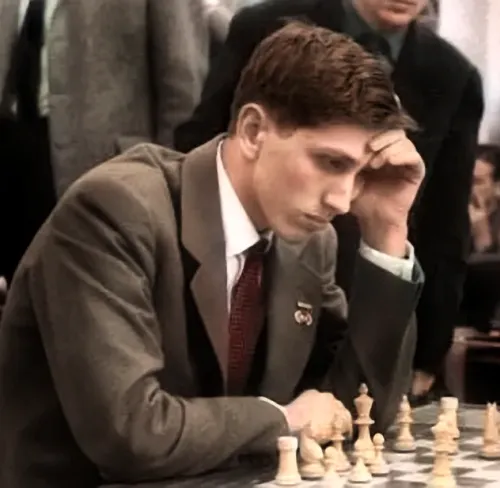
Paul Keres took board-one gold for Estonia with 15½/20, though Estonia ended tenth. Latvia was sixth and Austria seventh, Austria still fielding its own side three years before its players were folded into the German team.
Full table
- Hungary 110½; 2. Poland 108; 3. Germany 106½; 4. Yugoslavia 104½; 5. Czechoslovakia 104; 6. Latvia 96½; 7. Austria 95; 8. Sweden 94; 9. Denmark 91½; 10. Estonia 90; 11. Lithuania 77½; 12. Finland 75; 13. Netherlands 71½; 14. Romania 68; 15. Norway 64½; 16. Brazil 63; 17. Switzerland 61½; 18. Italy 59; 19. Iceland 57½; 20. France 43½; 21. Bulgaria 38½.
What happened to the players
Several fates stand out. Latvia’s Vladimir Petrovs, who scored 13½/20 on board one, was arrested in 1942 after remarking in the USSR on Latvia’s poor supply situation. He was sent to a Siberian Gulag and died of malnutrition. His teammate Karlis Ozols joined the SS after the German occupation, assisted in the extermination of Latvian Jews, and later played tournaments in Australia into the 1990s.
Lithuania’s Markas Luckis, second-best on board four, also remained in Argentina after 1939.
Zander closed the event with an awards ceremony in the exhibition hall. Germany also won the parallel problem-solving competition, ahead of Hungary and Latvia. The organisers billed the whole affair as a mega-event, with living-chess demonstrations and revue shows by the Doorlay Girls.
Original source: ChessBase
Noticed an error in the article? Report it from here.