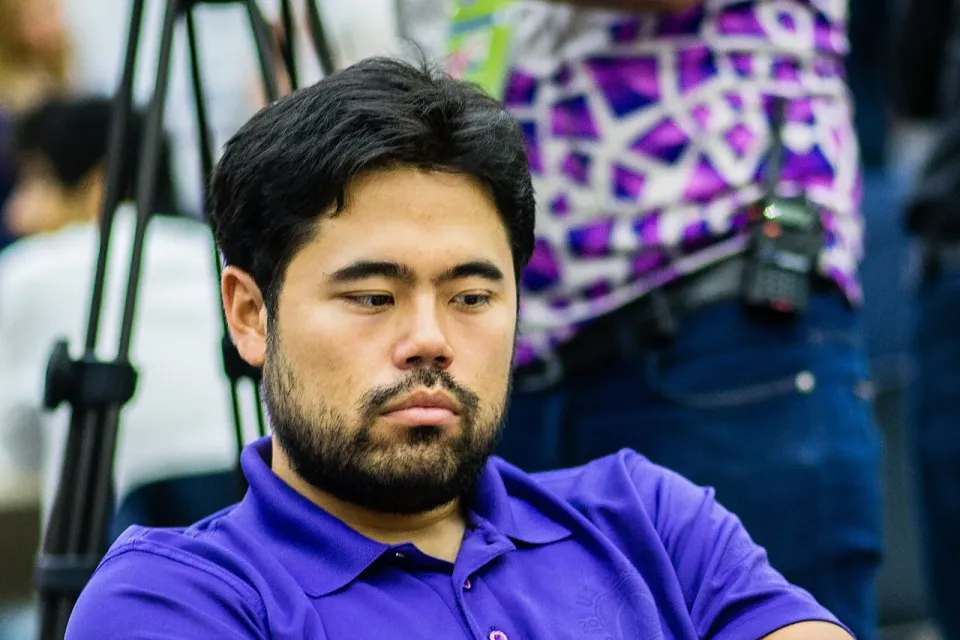
Nakamura's 65th Bullet Brawl Win Is the Latest Chapter in a Two-Decade Bullet Reign
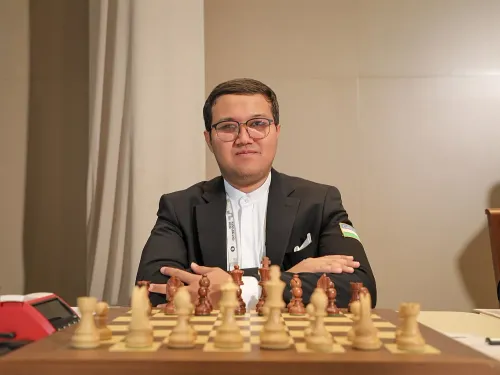
Hikaru Nakamura picked up his 65th career Bullet Brawl title on Saturday, his 16th of 2026 alone, scoring 51/65 for 170 points and finishing 23 points clear of the field even after visibly coasting late in the arena. He put together a 19-game winning streak along the way. It’s the kind of result that barely registers as news anymore, and that’s precisely the point worth dwelling on.
GM Nihal Sarin took second with 147 points and $250, and IM Renato Terry, who has been building his own reputation this year as one of Chess.com’s 3+0 Thursday specialists, rounded out the podium in third with 138 points and $150. GM Amin Tabatabaei took fourth. Nakamura’s own first-place check was $400, a modest sum next to the margin he won it by.
Long before Bullet Brawl existed as a Chess.com event, Nakamura was already the player everyone associated with one-minute chess. On the old Internet Chess Club in the mid-2000s, playing under a well-known alias, he built a reputation for grinding out bullet games at a volume and quality that other strong grandmasters simply couldn’t match. That reputation predates his world top-10 ranking, his classical title runs, and his current life as a streamer. It’s arguably the oldest and most stable part of his chess identity.
What’s striking is how little the underlying skill set has had to move to stay dominant. The interface changed from ICC’s clunky client to Chess.com’s polished arena format. The audience went from a small, insider community of strong online players to hundreds of thousands watching on Twitch and YouTube. The stakes shifted from bragging rights to actual prize money and a running leaderboard of titles. Through all of it, the same core ability, pattern recognition and mouse speed under a one-minute clock, has kept producing the same result: Nakamura wins, and the margin is usually not close.
Compare that to how dominance tends to work in classical chess, where even the greatest world champions have had multi-year droughts, retooled openings, or lost a step against a younger generation. Magnus Carlsen went through stretches of relative underperformance and public frustration with classical chess before leaning harder into faster formats himself. Bullet, as a discipline, seems to reward something more durable, closer to a reflex than a body of theoretical knowledge that ages and needs refreshing.
That durability is exactly why a 23-point margin of victory, achieved while easing off the accelerator, doesn’t read as an outlier. It reads as the continuation of a streak that started before most of Nakamura’s current online audience were regular chess fans. The 16th title of 2026 alone is a reminder that this isn’t a hot streak or a good year. It’s closer to a natural law of the online bullet ecosystem: whatever changes around it, the top of that leaderboard tends to have the same name attached.
The real test for anyone hoping to end the run isn’t matching Nakamura’s calculation speed for a single event. It’s doing it consistently enough, across enough different platforms and formats, to make one week’s result look like more than a blip against nearly twenty years of evidence pointing the other way.
Original source: Chess.com
Noticed an error in the article? Report it from here.