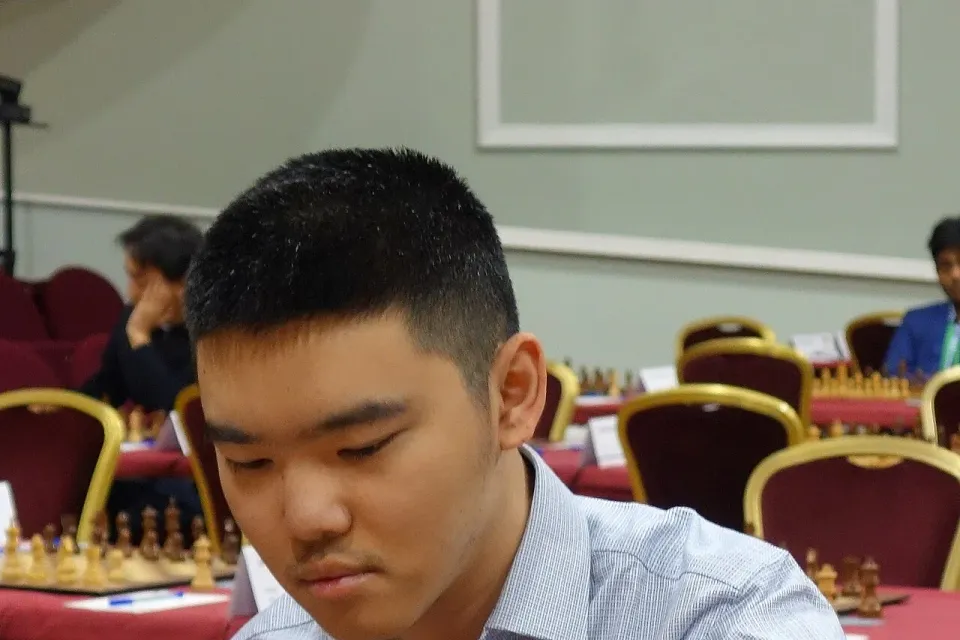
Jeffery Xiong successfully defended his Bullet Brawl title on Saturday, taking home the $400 first prize after a tense finish that saw him post 162 points and edge out IM Renato Terry and GM Nihal by a four-point margin. It’s a repeat title for Xiong, and on paper the numbers look modest: a few hundred dollars for hours of blitz-speed combat against some of the strongest bullet players in the world. But the prize figure is exactly what makes Bullet Brawl worth looking at through a financial lens rather than a purely competitive one.
Compare that $400 top prize to what a strong finish at a classical super-tournament pays, and the gap is enormous. Candidates or Grand Slam events can pay out tens of thousands to a winner, sometimes six figures when sponsorship money is heavy. Bullet Brawl operates on a completely different economic model: low overhead, no travel, no hotel rooms, just a server and a field of titled players logging in from wherever they happen to be.
That’s the real value proposition for events like this. They’re cheap to run and cheap to enter, which means they can happen constantly rather than a handful of times a year. A $400 purse isn’t life-changing money for a grandmaster, but it’s not really the point either. These arenas function more like a weekly paycheck system for elite online performance, small, frequent, and stackable, rather than a single career-defining jackpot.
There’s also a reputational currency at play that doesn’t show up in the prize list. Winning, or defending, a title in a recurring arena like this builds a track record that streamers and platforms can market. Xiong’s win adds to a personal brand of speed-chess dominance that has value well beyond $400, in subscriber numbers, in future invitations to higher-stakes bullet or blitz showcases, in simple name recognition among fans who follow these arenas closely.
The margin of victory matters here too. A four-point gap over the field, with Terry and Nihal both finishing within range, tells you this wasn’t a runaway. In arena format, where every game counts toward a cumulative score rather than a single elimination bracket, a four-point cushion over dozens of games is a genuinely tight race decided by consistency rather than one big result. That’s a different kind of pressure than a knockout final, and it rewards a different skill set: grinding out small edges over volume rather than surviving a single must-win moment.
It’s worth asking where this fits in the broader arc of online chess economics. Platforms have leaned hard into frequent, low-cost arena events over the past several years precisely because they generate content and engagement cheaply compared to funding a single marquee tournament. A title defense by a name player like Xiong is useful marketing regardless of the prize size, proof that the format keeps drawing strong fields back week after week.
None of this makes the $400 prize trivial. For working professional players, these arenas add up across a calendar, and repeat winners like Xiong are effectively building a secondary income stream on top of appearance fees and larger tournament prizes. The real story in the numbers isn’t the size of the check. It’s what a low-cost, high-frequency format like Bullet Brawl reveals about where the money in online chess is actually flowing: toward volume and visibility rather than one-off jackpots.
Original source: Chess.com
Noticed an error in the article? Report it from here.