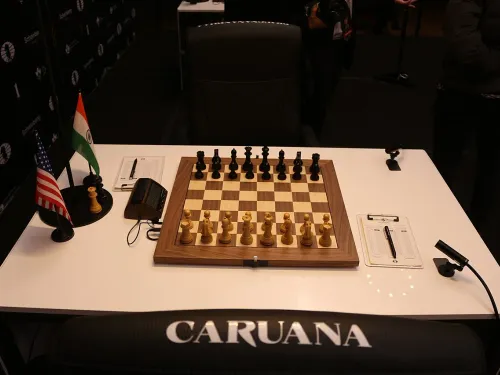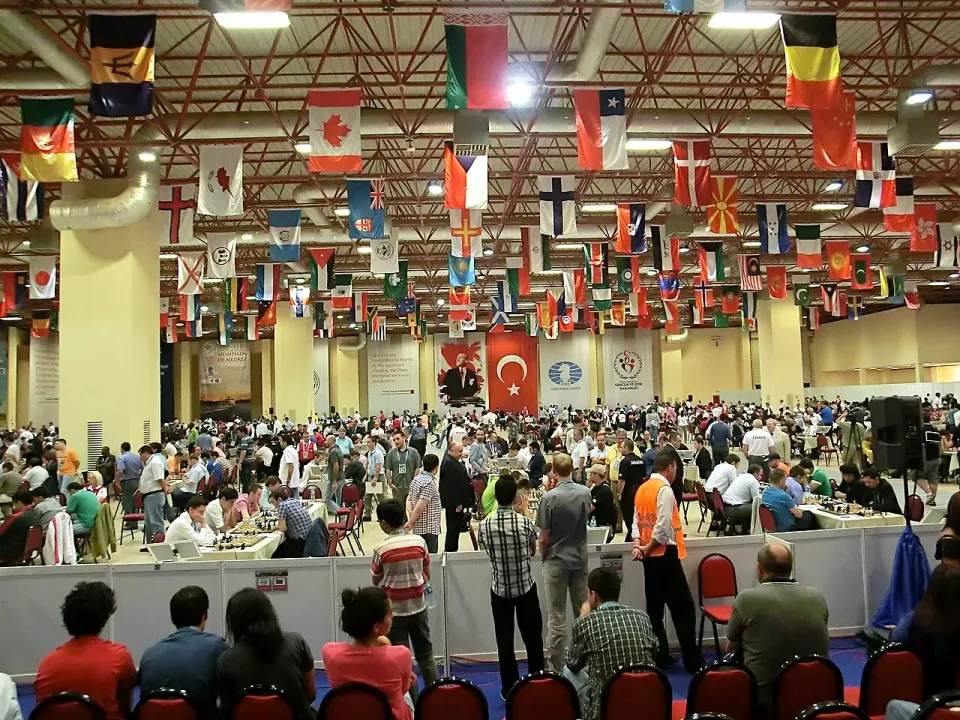
Most open chess tournaments, from local weekenders to the Chess Olympiad, use the Swiss system. It was first used in Zürich in 1895 and lets a big field produce a winner in a handful of rounds.
The idea is simple. Nobody is knocked out, and in each round players meet someone on the same score, or as close as possible. Leaders play leaders, so the strongest results rise to the top within a few rounds.
Two other rules shape the pairings. No two players meet twice, and colours are kept as even as possible, so nobody gets the same colour three games in a row.
Within each score group, FIDE’s standard Dutch system ranks players by rating and pairs the top half against the bottom half. In a group of eight, the first plays the fifth, the second the sixth, and so on.
Because nobody plays everyone, players often finish level on points, and tiebreaks decide the places. Each event picks its own order, set in its regulations before the first round.
Buchholz adds up the scores of everyone a player faced, rewarding a tougher set of opponents. “Cut 1” drops the lowest of those scores, so one weak opponent doesn’t skew it.
Sonneborn-Berger adds the full scores of opponents a player beat and half the scores of those they drew with. It rewards beating the players who did well. The Olympiad uses it as its first tiebreak between teams on equal match points.
The Grand Swiss uses yet another measure first: the average rating of a player’s opponents, minus the lowest. With two Candidates places at stake, a tiebreak can decide who goes through.
Original source: Wikipedia
Noticed an error in the article? Report it from here.