Marie Sebag
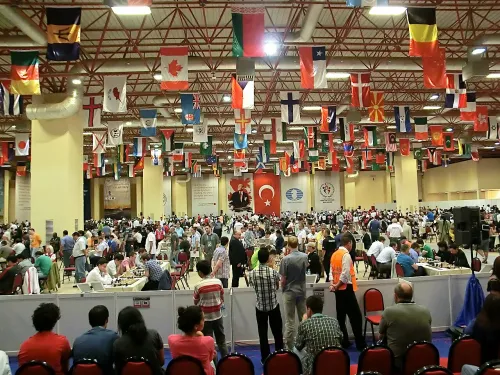
The 46th Chess Olympiad in Samarkand has already made history for its sheer scale, with a confirmed 205 open teams and 189 women’s teams once Angola finally joined for round three. That’s the biggest field the Olympiad has ever assembled, and buried inside that record-breaking number is a much smaller, quieter expansion worth noting on its own terms.
The ChessMom Project has doubled in size since it launched at the 2024 Budapest Olympiad, now covering 12 players from countries as far apart as France, Mongolia, Botswana and Barbados. FIDE funds the travel costs of a caregiver who accompanies each player and her young child, and for Samarkand the eligibility window was widened to children under two, up from the original pilot’s cutoff.
That’s not a cosmetic tweak. It’s an acknowledgment that the practical strain of combining elite competition with childcare doesn’t vanish once a baby turns one, and that a pilot program built for a first Olympiad needed to flex if it was going to survive a second.
The list of participants spans a wide range of titles and federations: GM Marie Sebag of France, GM Elisabeth Pähtz of Germany, WIM Elisabeth Hapala of Austria, WIM Bayarmaa Bayarjargal of Mongolia, WGM Beatriz Irene Franco Valencia of Colombia, and WIM Zenia Corrales Jiménez of Mexico.
Rounding out the group: WFM Razan Alshaeby of Jordan, WFM Patricia Evarista Castillo Peña of the Dominican Republic, Robyn Julian Klaasen of South Africa, WCM Karen Julissa Figueroa Figueroa of Barbados, WFM Luzia Fernandes Pires of Angola, and WIM Onkemetse Linda Francis of Botswana.
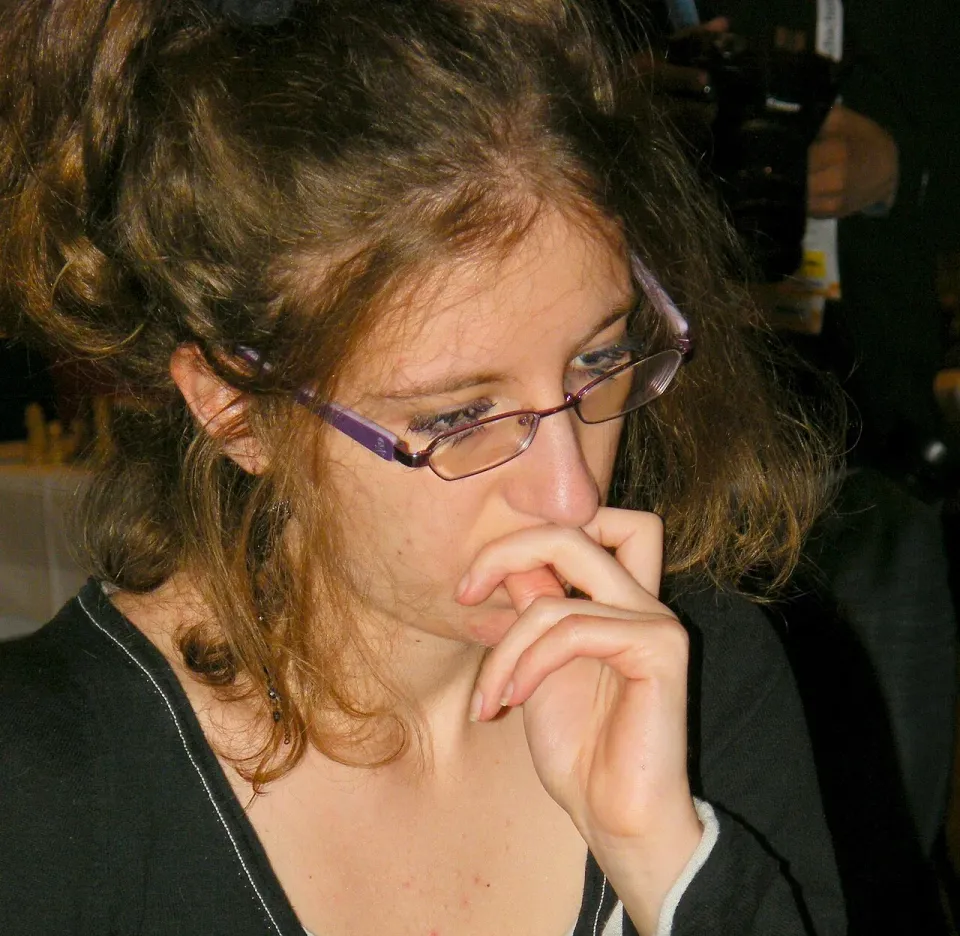
The clearest historical marker in this story comes from Sebag herself, who pointed to an Olympiad she simply couldn’t play. “Ten years ago, I couldn’t play the Baku Olympiad because my first baby was only three months old,” she said, adding that motherhood has reshaped how she handles losses over the board.
“Before, when I would lose a game, I would be very upset and now it’s not so important. Even so, when I lose, it’s still not easy to go to sleep!”
That gap between Baku 2016 and Samarkand 2026 is really the whole story in miniature. A decade ago, a three-month-old was reason enough to sit out one of chess’s marquee team events. Now there’s a structure specifically built so that decision doesn’t have to be made at all.
Other players described the program in more practical terms. WIM Zenia Corrales of Mexico called it essential to making an Olympiad campaign workable alongside motherhood, while WIM Bayarmaa Bayarjargal of Mongolia said it let her train more effectively and reassured her that “becoming a mother doesn’t mean giving up my dreams as a chess player.”
There’s a personal footnote inside the group too. WIM Elisabeth Hapala of Austria is married to GM Fernando Peralta, who is representing Argentina at the same Olympiad, meaning both parents are competing at the event.
None of this changes the results on the boards in Samarkand. But the ChessMom Project’s growth from a single-Olympiad experiment to a fixture with 12 beneficiaries is its own kind of progress marker, one measured in caregivers funded and age limits extended rather than points scored.
Original source: FIDE
Noticed an error in the article? Report it from here.