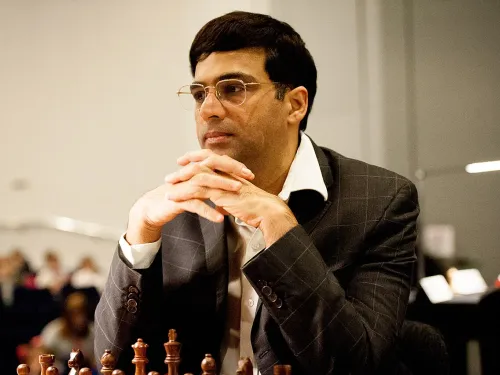
Nigel Short has spent more than four decades collecting chess milestones, but until now, one gap remained on his personal map. This Antarctic summer, six players representing all six inhabited continents will travel to Antarctica and the Geographic South Pole for the Polar Chess Expedition, a FIDE-rated rapid event billed as the most geographically extreme chess tournament ever staged.
The idea traces back to something almost throwaway. Two years ago, Candidate Master Aung Kyaw Moe of Myanmar came across an interview in which Short mentioned he had won tournaments on every continent except one. “I’ve won tournaments on six continents. Antarctica is the one still missing,” Short said. Aung took the line and ran with it, eventually turning a passing remark into a fully rated FIDE event.
That detail matters more than it looks. Short isn’t a journeyman chasing a novelty record; he’s the Englishman who in 1993 became the first from his country in over a century to challenge for the World Chess Championship, facing Garry Kasparov. He now works as FIDE’s Director for Chess Development, which means the federation itself has a direct stake in whether this record attempt succeeds.
Aung’s own account of building the tournament captures the shift from idle comment to logistics. “Nigel had the idea; my job was to make it real. Now it is, and we’re taking it to the end of the earth,” he said. Getting there meant coordinating with national federations across all six continents to field one player from each.
The roster reads like a small United Nations of chess titles. Alongside Short (England, Europe) and Aung (Myanmar, Asia) are Woman FIDE Master Damaris Abarca González of Chile representing South America, Woman International Master Jesse February of South Africa for Africa, FIDE Master Shaun Press of Papua New Guinea for Oceania, and Woman Candidate Master Tris-Ann Richards of Saint Lucia for North America.
The format itself is straightforward on paper: rapid time control, every round broadcast live, early games played on the Antarctic ice before the field moves to 90 degrees South for the finale. The organizers are chasing multiple potential world-record categories at once, including southernmost chess tournament ever played and first event to bring all six inhabited continents to the pole simultaneously.
For the smaller federations involved, the symbolism carries as much weight as the record itself. “Saint Lucia is a small island, but chess has never asked me to think small,” said Richards, who represents North America despite her country’s population barely cracking 180,000. Abarca González framed her trip in similar terms, saying carrying South America to the bottom of the earth is “the latest way I’ve found to keep playing for something larger than myself.”
Press, representing Oceania from Papua New Guinea, put the real risk plainly: “the biggest opponent isn’t across the board; it’s the weather.” February echoed that spirit of embracing discomfort, saying she lives by the rule that if something scares her a little, it’s probably worth doing.
What makes this expedition different from most record-chasing stunts in chess is that its centerpiece already has a real claim to greatness rather than a manufactured one. Short’s continental sweep, minus Antarctica, was built over a career that included a genuine World Championship match. Whether the ice cooperates and the games actually get played is now a logistics question as much as a chess one.
Original source: FIDE
Noticed an error in the article? Report it from here.