Srinath Narayanan
Every two years the Olympiad tries to top itself, and Samarkand has managed it by a wide margin. The 46th FIDE Chess Olympiad, running from September 16 through 27, will field 208 teams in the Open section and 192 in the Women’s event, a combined 400 that smashes the previous mark of 380 teams set in Budapest in 2024.
That kind of jump rarely happens by accident. Olympiad participation has climbed steadily for two decades as federations in Africa, Central Asia and the Caribbean have professionalized, but a 20-team leap over the last record still stands out. It says something that the growth is coming from smaller, newer federations rather than a handful of superpowers padding their own delegations.
History has a way of repeating itself with the host nation, too. Uzbekistan arrives as the surprise gold medalists from 2022, and now gets to defend that title on home soil in front of a crowd that watched the breakthrough happen. Few countries get the chance to host an Olympiad the cycle after their own upset win, and the pressure of that timing is its own kind of story.
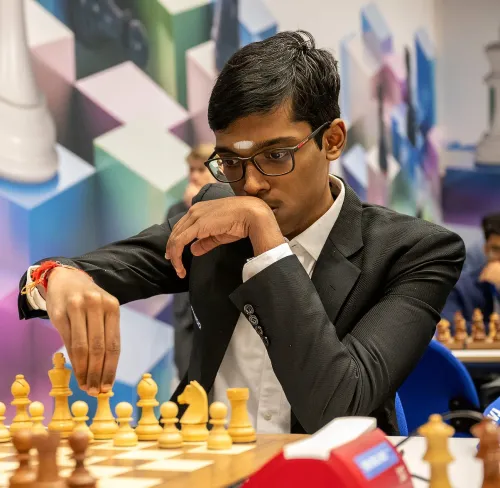
India, meanwhile, is trying to do something Uzbekistan couldn’t: defend. The Open champions from Budapest return with the core of the squad that won there. Captain GM Srinath Narayanan struck a cautiously confident tone, noting that “this Indian team has a lot going for it,” pointing to continuity in the lineup, added experience, and depth across the boards.
That depth argument tracks with a broader shift The Chess Herald has tracked in Indian chess, where the country has gone from leaning on one or two elite names to fielding a genuine bench of world-class players. An Olympiad, more than almost any other format, rewards exactly that kind of depth, since four players have to perform together across 11 rounds rather than one star carrying the load.
The Women’s section carries its own title defense narrative. India also won gold there in 2024, and a deep field of ambitious federations has traveled to challenge that result this time around. The United States, China and Germany are among the established powers chasing gold in the Open section as well, ensuring the field isn’t just large but genuinely competitive at the top.
Beyond the two marquee events, Samarkand is hosting the third FIDE Chess Olympiad for People with Disabilities alongside the main competition, bringing together a record 41 teams representing players with visual, hearing and physical impairments. The FIDE Congress and elections run in parallel, along with a Summit on Chess in Education scheduled for September 24 as part of FIDE’s 2026 Year of Chess in Education.
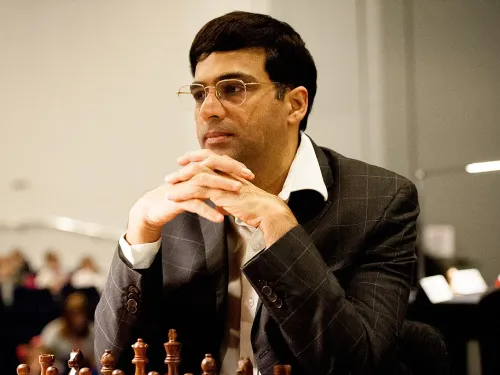
One ceremonial thread ties the whole build-up together. The traditional torch relay was performed in India, where FIDE Interim President GM Vishy Anand and All India Chess Federation President Nitin Narang handed the Olympic flame over to GM Javokhir Sindarov, who carried it onward toward Samarkand, a moment The Chess Herald has already traced as part of a familiar passing-of-the-torch story in Uzbekistan’s chess rise.
What Olympiad history keeps proving is that raw talent isn’t enough over two weeks of team chess. Captains have to judge, match by match, when to push for a win and when a draw is the smarter result, since one strong board can’t indefinitely cover for weak results elsewhere.
With 400 teams now chasing that balance across 11 rounds, Samarkand has set up the largest test of that principle the Olympiad has ever run.
Original source: FIDE
Noticed an error in the article? Report it from here.