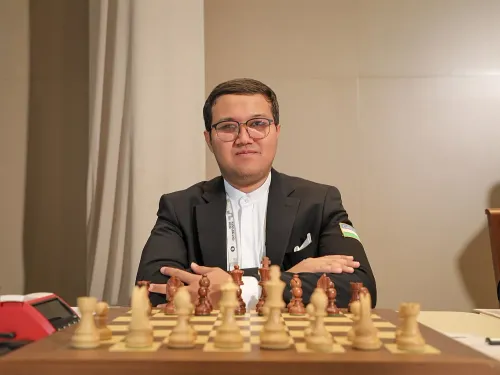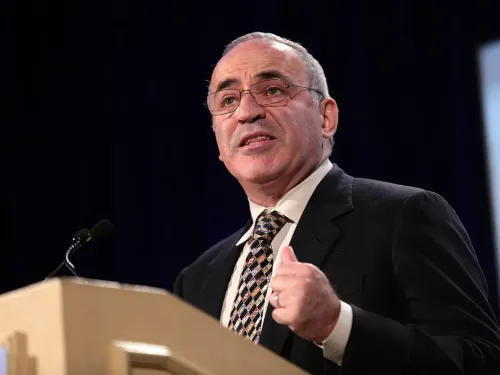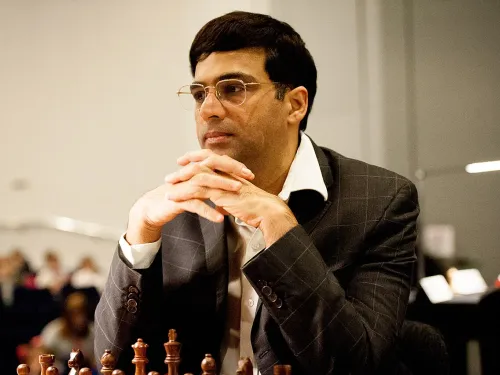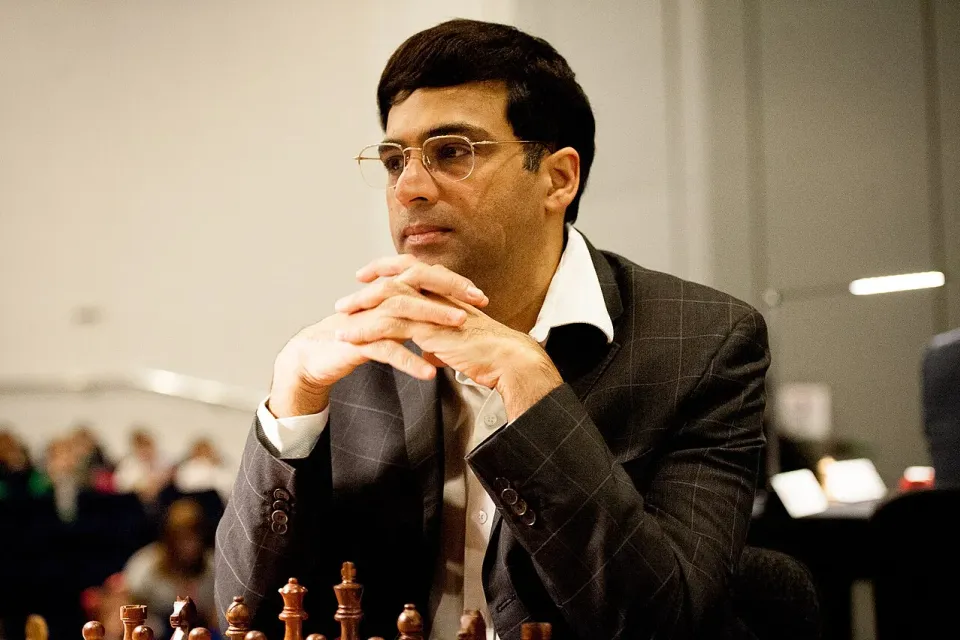
Javokhir Sindarov’s opening day at the 2026 Tech Mahindra Global Chess League produced one of those results that chess fans have seen before, just with the names swapped. The 20-year-old Uzbek grandmaster beat Viswanathan Anand and held Alireza Firouzja to a draw, powering the FYERS American Gambits to a clean sweep of both their matches on day one. Anand, the five-time world champion, found himself on the wrong side of a scoreline against a player who was born nearly two decades after Anand first became a grandmaster.
There were other results on the opening day too, with Magnus Carlsen’s Alpine APL Pipers picking up a win of their own, a reminder that this league is stacked with multiple generations of elite talent sharing the same playing hall.
The shape of this result is not new. Anand himself spent the early 1990s as the player doing the upsetting, arriving on the world stage as a fast, fearless twenty-something who took down entrenched veterans and eventually challenged for the world title before the decade was out. Every era in chess has its version of this handoff: an established name gets outplayed by someone young enough to be their student, and the result gets read as a signal rather than just two points on a scoresheet.
What makes Sindarov’s case interesting is timing rather than shock value. He is part of a wave of players in their late teens and early twenties, alongside names like Firouzja himself a few years back, who have pushed into elite events well before turning 25. Anand, now in his fifties, has long since shifted his competitive focus, playing selectively rather than chasing the top of the rating list, which makes a result like this less an indictment of his form and more a snapshot of where the generational line currently sits.
The format of the Global Chess League itself amplifies these moments. Because it’s a franchise team competition rather than a traditional individual round-robin, a single day can pack a world champion and a rising star from a completely different generation into the same lineup card, playing on the same day, with the results feeding a team standings table rather than a personal rating chase. That structure is part of why day one produced this particular juxtaposition: Sindarov didn’t have to wait for a Candidates cycle or a top-tier invitational to get his shot at a legend, he just had to be picked for the right roster.
It’s worth being careful not to overread a single day of team chess. Team scoring in these formats often rewards match-level results over individual brilliance, and a young player having a hot start doesn’t rewrite the historical record of a five-time world champion. But symbolically, these are the moments that stick in memory long after the standings reset: a teenager or twenty-something beating the guy whose games they grew up studying.
Anand’s own career gives this extra resonance. He was the one, decades ago, delivering these results to the generation before him. Seeing him now on the receiving end isn’t a tragedy or even much of a surprise given how chess talent pipelines have accelerated, but it’s the kind of full-circle detail that makes team events like the Global Chess League worth watching beyond just who tops the table at the end.
Original source: Chess.com
Noticed an error in the article? Report it from here.