Viswanathan Anand
Anand Admits the Cracks Behind Samarkand's Record Olympiad
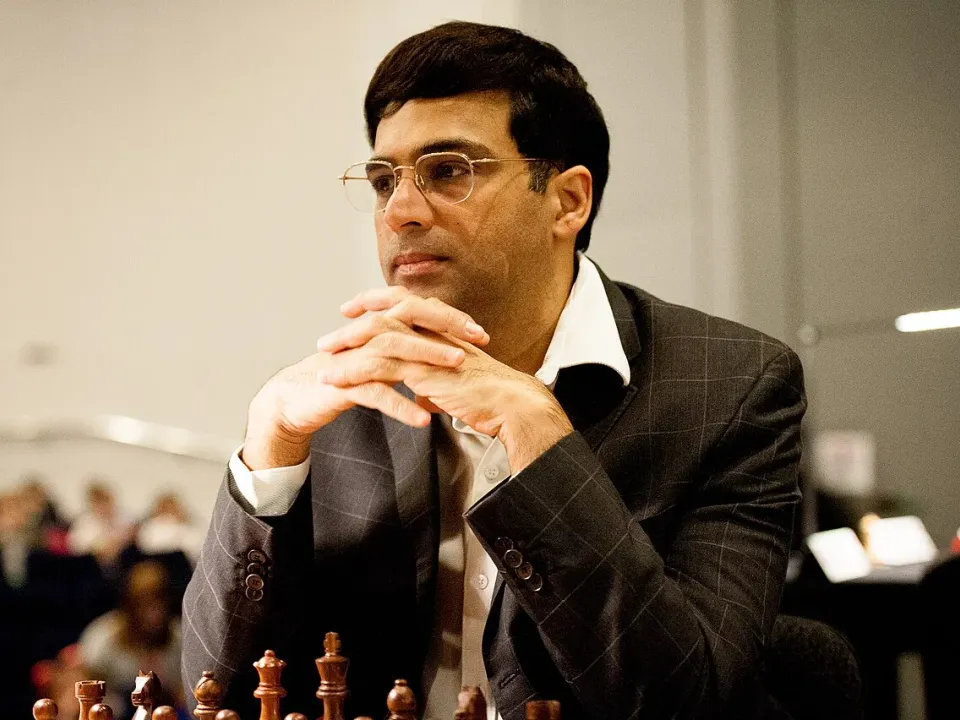
Every Olympiad opening press conference is supposed to be a victory lap before a ball has been played. Samarkand’s version, held ahead of the 46th FIDE Chess Olympiad, mostly followed that script. Then Viswanathan Anand, five months into his job as FIDE Interim President, spent a chunk of his time at the microphone doing damage control instead.
The numbers moderator Charlize van Zyl opened with were genuinely staggering: nearly 400 teams entered across the main event, 208 in the open section and 191 in the women’s section, alongside the biggest-ever field for the Chess Olympiad for People with Disabilities. That growth has been building for a while, and The Chess Herald has already tracked how Samarkand’s 400 teams broke Budapest’s previous record by 20.
Bigger fields mean bigger logistics problems, and that’s exactly what surfaced. Anand acknowledged complaints that had been circulating on social media about accommodation, accreditation and visas, saying plainly that “there have been certain problems that have cropped up” and that some teams were “having trouble.”
He didn’t try to spin it. Anand said organisers were “working very hard” with the local committee, that “a lot of issues” had already been resolved, and that he hoped the rest would follow “as quickly as possible.”
That’s a notably candid admission for an opening presser, and it matters because of who was saying it. Anand became Interim President only in July, and a record-breaking Olympiad running into visible friction on day one is precisely the kind of test that defines an early presidency, fairly or not.
Before any of that, Anand opened with sadder news: the death of Georgios Makropoulos, FIDE Vice President and Honorary President of the Greek Chess Federation. He then pivoted to why the event still matters to him, calling the Olympiad “a place where chess players of all levels compete in the same tournament, a celebration of chess.”
Alisher Sadullaev, the Uzbekistan federation’s 1st Vice President, framed the scale of the undertaking from the host side. He noted that Samarkand has spent roughly two years turning itself into a venue and is now running three events simultaneously: the Olympiad, the Congress, and the Disability Olympiad, a field The Chess Herald covered separately as it hit a record 40 teams.
The panel’s most personal storyline belonged to Gulrukhbegim Tokhirjonova. Two years ago she played board one for the United States and helped them to bronze in Budapest; this week she’s back under Uzbek colours for the first time since 2018.
She said she was invited back by the federation and government and was “really happy and pleased,” adding that she left for personal reasons but still loves her country and teammates.
Nodirbek Abdusattorov closed out the panel with a scouting report on his own team. Uzbekistan’s board one, the 2021 World Rapid Champion and this year’s Wijk aan Zee winner, pointed out that the squad now fields two top-ten players and a third board rated over 2700, calling it a big improvement compared to the Chennai and Budapest editions.
None of that erases the accommodation and visa complaints Anand spent part of the presser fielding. A record field was always going to strain a host city, and how quickly those remaining issues get cleared up over the coming days will say more about this Olympiad than any of the opening ceremony’s numbers.
Original source: FIDE
Noticed an error in the article? Report it from here.