Gukesh Dommaraju
Gukesh Takes a 20-Move Draw as Sindarov Neutralises His London
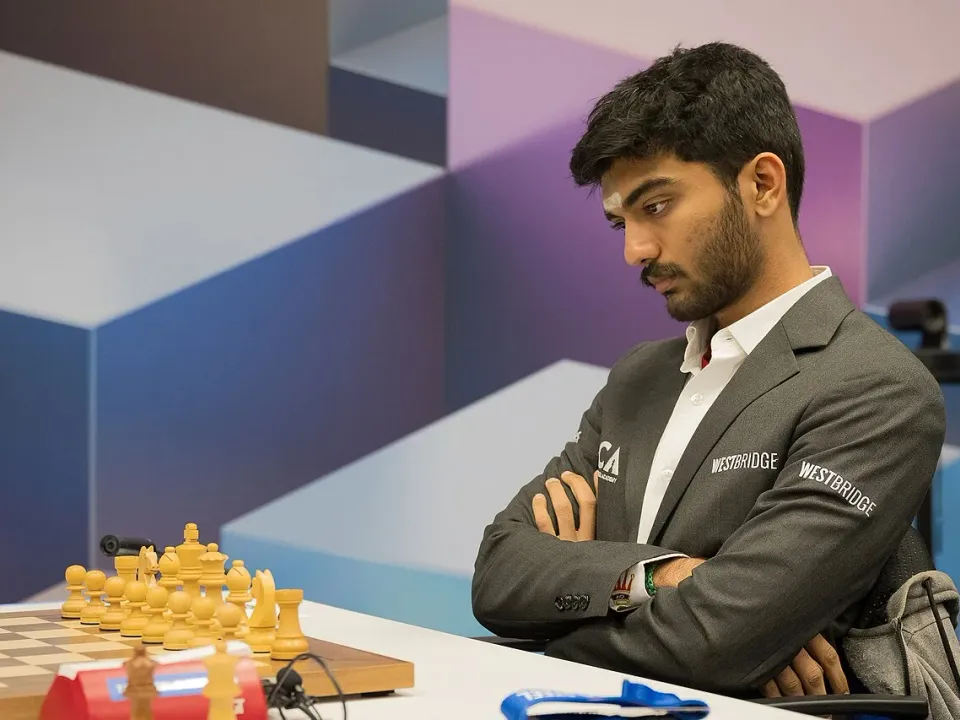
Game 2 of the 2026 FIDE World Championship in Geneva ended in a 20-move draw by repetition, leaving Gukesh Dommaraju and Javokhir Sindarov level at 1-1. Gukesh, the defending champion, had White and chose the London System with 3.Bf4. Daniel King has also published a video analysis of the key moments for ChessBase.
It was a first for him at this level. In the 2024 match against Ding Liren he had played 1.e4 three times and 1.d4 and 1.Nf3 twice each.
His explanation was relaxed: “It’s a good opening! … I thought it would be a nice, cool way to start the match!”
A reputation rebuilt
The London once had a name as an opening for players who just wanted a game without theory. That has faded. Magnus Carlsen has used it extensively, and Ding beat Ian Nepomniachtchi with it in game six of the 2023 World Championship.
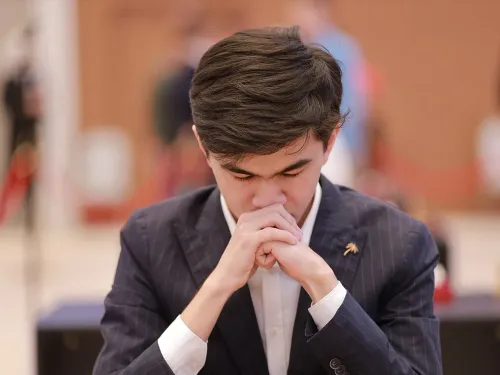
Sindarov, playing Black in a world championship game for the first time, was ready. He admitted he hadn’t expected the London, but said he had “checked this line before also a lot.”
The clock again
As in Game 1, Sindarov moved faster in the opening. His 7…Qb6 was the first move to make Gukesh think, and Gukesh lost his clock lead.
Gukesh spent six minutes and rejected 8.Qb3 because of 8…Nh5!. He said he “knew” 8.Rb1 was the move, and conceded he might have remembered more from his notes.
Then came 11…Qd8, which puzzled the Chess.com commentators and Gukesh, who thought for 25 minutes. Sindarov said the idea was …Qd8, then …Be8, …Nd7 and …f5. Gukesh admitted he underestimated the …Nd7 part of that plan.
Sindarov then took eight minutes over the obvious 14…Nd7, and was seen yawning. He later said he was “just trying to chill” while his opponent thought, and was not sleeping.
Where it stalled
With 15…f5! the opening had clearly gone well for Black. Judit Polgar expected …g5 to follow soon. Gukesh spent 30 minutes on 16.f3, hinting at e4, but Sindarov’s knight to f6 took away both that break and any real prospect of …e5.
What happened next is the notable part. Against Ding, Gukesh often played on from worse or equal positions. Here he offered a repetition and Sindarov accepted, just as the action seemed ready to heat up.
His reasoning: “You hope for your opponent to go wrong at some point, but also it’s equally likely that you’ll get into trouble, so it’s about making some clever decisions.” With Sindarov rated 2782 to his 2710, a safe draw is no bad result for the champion, though he did not put it that way.
Mood in the room
Both players sounded content. Asked if he would have liked to win one of the first two games, Gukesh joked, “I’d have preferred both results go my way!” He said he feels energetic at the board and is happier away from it than in Singapore, crediting his friends Charmie Kapoor and Shikhar Saxena.
Sindarov, speaking to Mike Klein, said he tries to be better in openings, but “in general anyway you’ll win a game with good chess.”
His pre-game talk with second Nikita Vitiugov was, he said, “not about chess, some mental things,” meant to keep him relaxed.
Reactions
Vidit Gujrathi called it “a quicker draw than yesterday, but still a well played game by both sides,” and said the pressure has yet to build up as the match goes on.
Game 2 was a quicker draw than yesterday, but still a well played game by both sides.
So far both the players seem to be in good shape & seem sharp. We will have to wait for the pressure to build up as the match goes on!
Anish Giri put the onus on the challenger: “It’s on Sindarov to prove something in this match.”
Fair game by Gukesh.
It's on Sindarov to prove something in this match.
What comes next
Game 3 is today, Thursday 26 November, with Sindarov holding White for the second time. Friday is the first rest day.
The match is 14 games, first to 7.5, with a $2,500,000 fund. A 7-7 tie goes to a playoff beginning with four 15+10 rapid games.
Both of the first two games have been draws, and in both Sindarov used less time. Whether Gukesh keeps falling behind on the clock may matter more than the openings.
- 1.
- 2.
- 3.
- 4.
- 5.
- 6.
- 7.
- 8.
- 9.
- 10.
- 11.
- 12.
- 13.
- 14.
- 15.
- 16.
- 17.
- 18.
- 19.
- 20.
Original sources: ChessBase, Chess.com, ChessBase
Noticed a mistake? Report an error in this article.