The third FIDE Chess Olympiad for People with Disabilities opened in Samarkand with 41 teams beginning play in Round 1, and the ceremonial first move fell to Akaki Iashvili, FIDE’s Special Tasks Director, and Komil Sindarov, Vice President of the Uzbekistan Chess Federation, on Board 1 of Poland against Mongolia.
Fittingly, that match turned out to be one of the tightest of the day. Poland took the top two boards, Mongolia answered on boards three and four, and the two sides settled for a 2-2 split.
Most of the seeded teams did what seeds are supposed to do. Cuba beat IPCA 3½-½, Israel matched that scoreline against Bangladesh, and Germany, USA, Ukraine and Hungary all opened with clean 4-0 sweeps.
The Philippines put up one of the day’s stronger results, taking down Brazil 3½-½. Argentina beat Egypt 3-1, the Czech Republic beat Belarus 3-1, India beat Uzbekistan 2 by the same margin, and Serbia, Switzerland and Kazakhstan all won 3-1 against Vietnam, Zimbabwe and ICCD respectively. Spain closed out its opener 3½-½ over China.
The host federation had plenty to cheer. Uzbekistan 1 swept Uganda 4-0, while Uzbekistan 3 pulled off an upset of its own, beating a higher-rated Venezuela squad 2½-1½ behind wins from Abdurahmon Azimjonov and Abbas Eshmuratov.
Croatia and Türkiye drew 2-2, and the day’s biggest shock came from Kyrgyzstan, who beat a considerably higher-rated Turkmenistan team 3-1 after Toktobek Bolotov and Gulzat Kasymbaeva won on boards three and four following two early draws.
None of this happens in a vacuum, though. This is only the third running of the event, and its short history is really the story here.
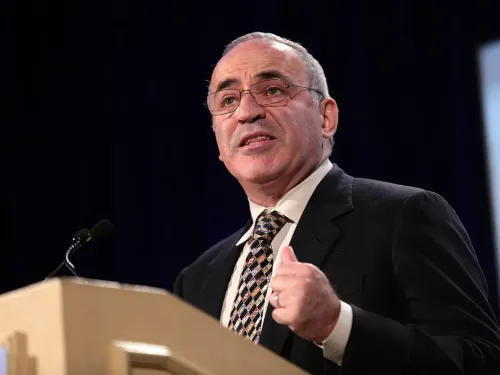
Sindarov noted that this is the first time the Olympiad for People with Disabilities has run alongside the main Chess Olympiad in the same host city, calling it a foundation he hopes “will help make it possible for the Olympiad for People with Disabilities and the Olympiad to be held at the same time in the future.”
Samarkand’s hosting duties this year sit alongside other milestones the city has claimed recently, something Chessori has covered in the context of the region’s chess history.
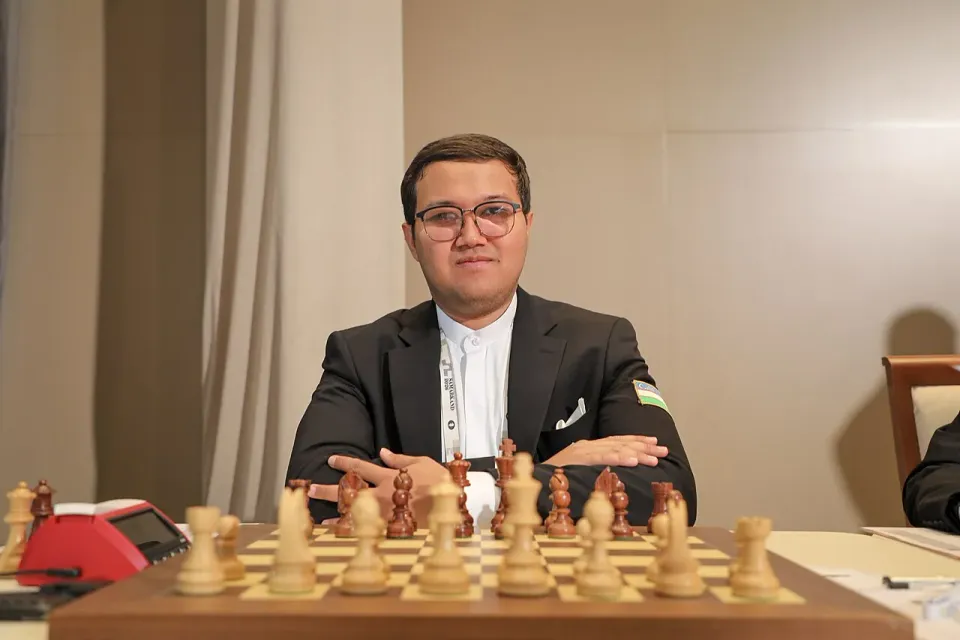
That growth trajectory shows up in the players themselves, not just the schedule. Axadxon Kimsanboyev, who beat Enock Seguya on Board 1 for Uzbekistan 1, has played every edition since the inaugural event in Belgrade in 2023, where he won a Board 4 silver medal.
His own read on the arc mirrors what the organizers are describing: “Every Olympiad, the number of participants is getting bigger and bigger. I hope that in the next Olympiad even more teams will participate.”
That kind of continuity across just three editions is unusual for a young event, and it’s what separates growing pains from genuine momentum. Sindarov also pointed to Uzbekistan’s own chess infrastructure ballooning from one or two international tournaments a year to 24, framing Samarkand’s dual hosting as part of the same expansion rather than a one-off gesture.
Not every competitor arrived with an established track record. Zimbabwe’s Gweshe Shantel, who took a tough loss in Round 1, described how her rating status has shifted since she first appeared without one: “now I have a rating that needs to be maintained.” For newer entrants, the event’s growth isn’t abstract, it’s the difference between an exhibition and a career.
Round 2 in Samarkand will show whether Thursday’s upsets, Kyrgyzstan over Turkmenistan chief among them, hold up, or whether the seeded teams reassert themselves.
Original source: FIDE
Noticed an error in the article? Report it from here.