Why Kasparov vs. Topalov in Chess960 Feels Like Unfinished Business
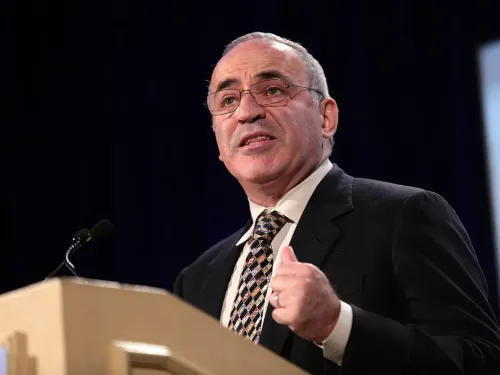
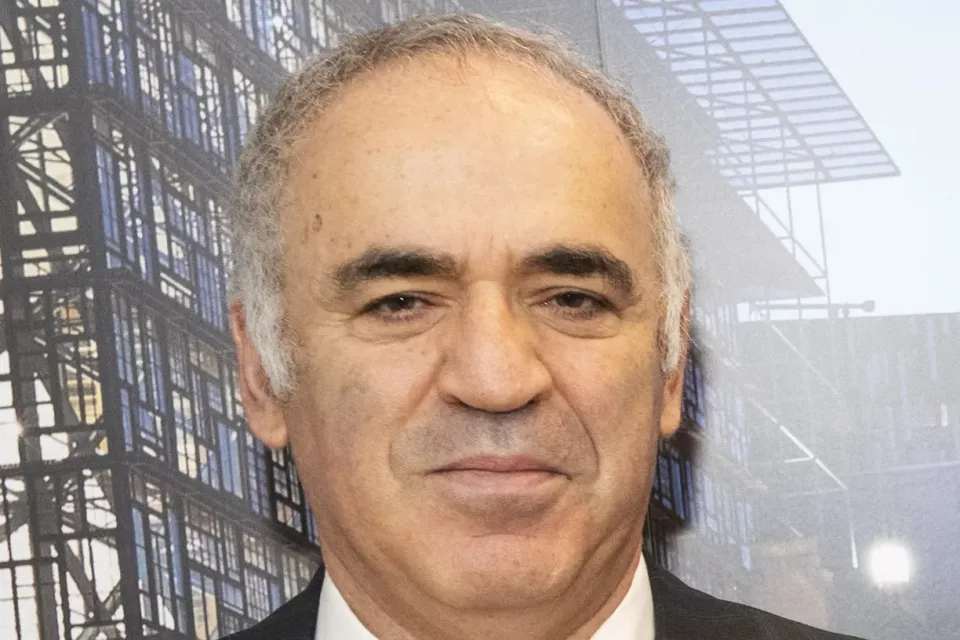
Garry Kasparov and Veselin Topalov are set to meet again, this time at the Saint Louis Chess Club for Clutch Chess: The Legends, a $144,000 Chess960 match running September 11-13. According to Chess.com, Kasparov will face the man who beat him in the final rated classical game of his career, with the two former world champions playing 12 games across the three days, four a day split between rapid and blitz, each round starting from a new random back-rank setup. For anyone who followed the sport closely, that detail is not a footnote. It is the whole reason this match matters.
This isn’t their first Chess960 meeting either. Topalov beat Kasparov 14.5-11.5 in a 2018 Champions Showdown match, also in St. Louis, in what was Kasparov’s first real competitive experience with the format. His results in the variant since have been shaky at best: a middling 5/9 in 2021, then a rough 0.5/9 the following year that even Kasparov himself has described as going badly. Topalov, by contrast, has stayed closer to the format’s competitive edge. Whatever this match is about for Kasparov, a strong head-to-head record in Chess960 isn’t part of the case.
That final classical loss came at Linares 2005, the tournament where Kasparov walked away from competitive chess at the height of his powers. He did not fade out with a whimper or a string of quiet draws. He left with a defeat to Topalov, a player who was then ascending toward the world number one ranking he would claim within a year. Kasparov’s retirement became one of the most abrupt exits by a reigning great in any sport, and Topalov’s name has been permanently attached to it ever since.
The two men have crossed paths since, mostly as pundits and occasional collaborators rather than rivals across a board. Topalov went on to lose the unified world championship to Vladimir Kramnik in 2006 and later to Viswanathan Anand in 2010, before his classical results faded. Kasparov, for his part, became chess’s most visible ambassador from the outside, weighing in on world championship cycles, coaching younger stars, and lending his name to the format this new match will actually be played in.
Chess960, also called Fischer Random, scrambles the back-rank starting position so memorized opening theory becomes useless. Kasparov has spent years arguing that classical chess is drowning in prep and that shuffled starting positions are a legitimate answer. Putting him in that format against Topalov, rather than in a standard classical rematch, is a pointed choice. It sidesteps the exact kind of preparation battle that defined their era and asks a 63-year-old Kasparov and 51-year-old Topalov to solve chess problems fresh, on the clock, with the crowd watching, and to split a prize pool weighted heavily toward the winner: $70,000 to $50,000, plus $24,000 more in bonuses.
There is a neat symmetry in staging this in St. Louis. The city has become the closest thing American chess has to a permanent home, and it has hosted plenty of Chess960 events built around exactly this pitch: bring back names fans already know and let them play something unfamiliar. A rematch of Kasparov and Topalov in classical chess would always be shadowed by comparisons to their peak-era games. Doing it in Chess960 lets both men show up as something closer to equals again, freed from decades of accumulated theory and the ghosts of that last game in Linares.
For Kasparov, the stakes are more personal than competitive. He is not trying to reclaim a rating or a title. He is closing a loop that has sat open since 2005, on his own terms, in a format he has spent years championing.
Original source: Chess.com
Noticed an error in the article? Report it from here.