Weekly Recap: Samarkand Afterglow, Fagernes Heats Up and Caruana Eyes a Record
The Samarkand Olympiad kept echoing through our 21 stories this week, from short games to German medals. Alongside it came a Swiss in Norway, a US Championship preview, regional tournament roundups and a run of explainers.
Samarkand, looking back
Jon Speelman went looking for the Olympiad’s shortest decisive games, and his column on 25-move miniatures opens with Igor Kovalenko’s 15.Nb1!, which trapped a queen in round one. Michael Adams supplied a different kind of surprise when he met the Sicilian with 3.Bc4 and beat Etienne Bacrot. England and France drew 2-2 that round.
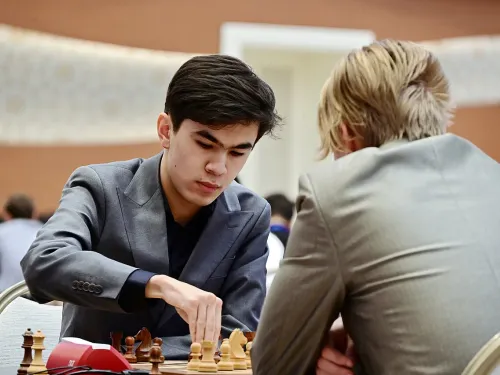
Germany’s first men’s team medal in 26 years is the subject of a feature tracing the bronze to Bernd Vökler’s youth project in Thuringia. Frederik Svane, 22, is part of that story. His second Olympiad gold puts him next to Robert Hübner as Germany’s only two-time individual gold winner.
Fagernes and the Sahel
In Norway, six players shared the lead after two rounds in Fagernes. By round seven, 14-year-old IM Christian Gloeckler led on 6/7 after beating Lukas Dotzer. Rinat Jumabayev sits half a point back.
Some of the Olympiad’s titled players are already looking ahead. A group is heading to Monastir for the Sahel Chess Festival, which runs October 24 to November 1 and expects about 300 international competitors.
Online and the money side
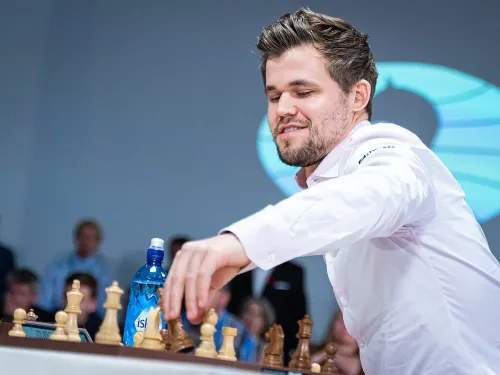
Hikaru Nakamura reached 3500 in Chess.com blitz, but Vladislav Artemiev beat him in the final round of Titled Tuesday and took the title. Nakamura streamed from Sithonia, Greece. Another online oddity is on the way: Josh Smith, an 1800-rated club player, will face Daniil Dubov in 100 bullet games with the handicap built into the payout.
Away from the board, a ChessBase feature reports that Evren Ucok has spent over $5 million on chess in three years, mostly on very young players. Its author helps run the programme. In Kazakhstan, President Tokayev received new FIDE President Timur Turlov and congratulated him on his election.
US Championship and a lesson from Larsen
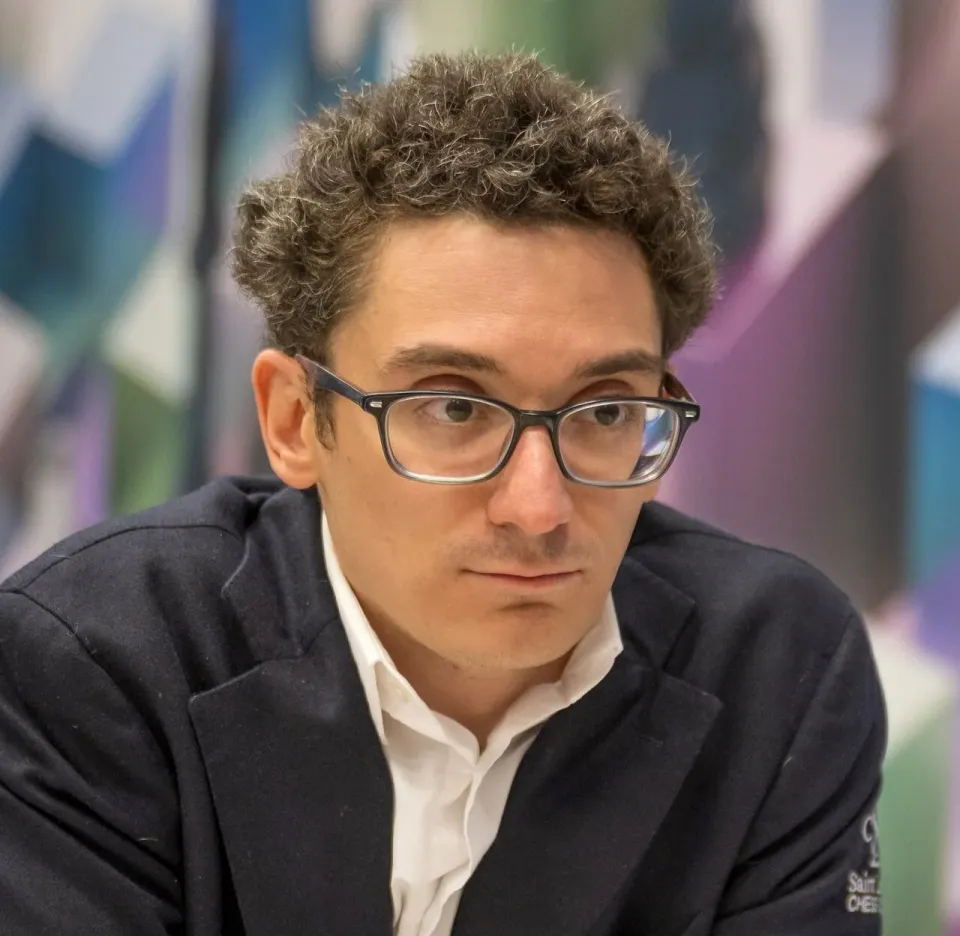
Fabiano Caruana has won four straight US titles. In Saint Louis, a fifth would match Samuel Reshevsky’s run of five between 1936 and 1942.
For study, a Master Class lesson shows how Bent Larsen outplayed Gheorghiu at Monte Carlo 1968. It argues his real strength was imbalanced positions, not 1.b3.
September’s tournament maps
Our monthly roundups covered three continents. In North America, a 165-player Toronto rapid was the biggest event we tracked, well ahead of a next-best field of 104. In South America, Cascavel, Araguari and Guayaquil anchored the classical calendar, with Brazil supplying most of the larger opens and Ecuador the biggest field.
Africa logged 216 events in September. A rapid in Cairo drew 381 players, the largest single field on the continent’s calendar.
Explainers
This week’s primers cover the basics. One lays out how a player becomes a grandmaster, a title FIDE awards for life. Another covers how classical, rapid and blitz time controls work, each with its own rating.
Two more cover the rules of play. Swiss pairings and tiebreaks are explained, including the system’s first use in Zürich in 1895. Chess960 keeps every rule but shuffles the back rank before each game. A final guide looks at how chess fights cheating, online and over the board, where the two settings pose different problems.
Noticed an error in the article? Report it from here.